
Don't Let Beneficiary Issues Fall Through the Cracks: September Housekeeping Tips
A message from Chad Carleton
As we transition into fall and the leaves begin their descent, it's the perfect time to ensure your plan’s beneficiary records don't fall into disarray. September is an ideal month for plan sponsors to review and refresh beneficiary election practices both online and offline. This newsletter outlines essential housekeeping steps to keep your beneficiary files organized and compliant.
Important: Retirement Plans Require a Separate Beneficiary Designation
One of the most common misconceptions among plan participants is that their retirement plan beneficiary will automatically be the same as their will or other insurance policy beneficiaries. This is not the case.
A qualified retirement plan requires its own beneficiary designation form. A participant's Will does not control who receives their 401(k) assets. Instead, the beneficiary designation on file with the plan (or the plan document's default provisions if no election is on file) governs the distribution of plan assets upon the participant's death.
This is why having current, accurate beneficiary elections on file is critical. Without a specific election, the plan document controls the outcome, which may not align with the participant's actual wishes.
Understanding Plan Document Defaults: What Happens When No Election is on File?
If a participant passes away without having made a beneficiary election, the plan document controls who will receive the account balance. Plan sponsors should review their plan documents to understand the default beneficiary provisions and communicate these clearly to participants.
Common Plan Document Provisions Include:
Surviving spouse (if married) receives the full account balance
If no surviving spouse, participant’s children
If no surviving spouse or children, the participant’s estate
Not all plan documents are written the same, so it is important that you review your specific plan document with your plan document provider to confirm your default beneficiary provisions. Ensure this language is clearly communicated to participants, so they understand the consequences of not filing an election.
Online Beneficiary Elections: The Best Practice
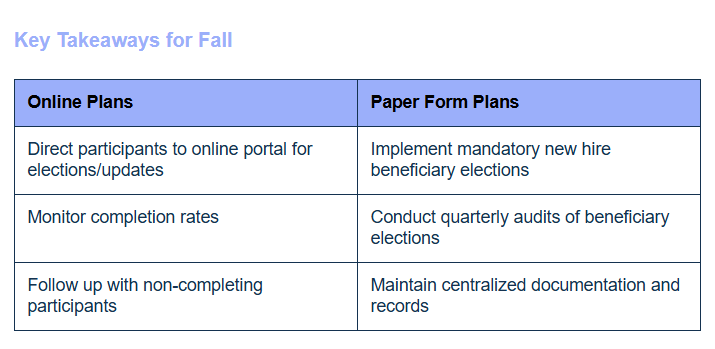
If your plan recordkeeper offers an online platform for beneficiary elections, this is your first line of defense against missing or outdated beneficiary information. Directing all participants to access the plan's online portal to make or update their beneficiary elections allows for a streamlined, auditable process that creates an immediate record of elections. Most, if not all, online recordkeepers should have a reporting option on current participant’s beneficiary designation as well as those missing a designation.
Paper Beneficiary Election Forms: Establishing a Procedure
For plans utilizing paper beneficiary election forms, implementing a robust procedure is critical to maintain compliance and prevent missing elections.
RECOMMENDED PROCEDURES:
1. New Hire Beneficiary Election Process
Implement a mandatory beneficiary election form requirement as part of your new hire enrollment process.
Ensure that every new participant receives the beneficiary election form during their initial plan enrollment meeting or onboarding materials.
Designate a responsible party (HR representative, benefits administrator) to collect completed forms and forward them to your TPA and/or recordkeeper within a specified timeframe (e.g., within 10 business days of hire).
2. Quarterly Beneficiary Election Audits
Schedule quarterly beneficiary audits to verify that all current participants have elections on file.
Request a beneficiary roster from your recordkeeper or TPA and cross-reference it against your current participant census.
Identify any participants with missing elections and proactively send them forms with a deadline for submission.
3. Documentation and Record Retention
Maintain a centralized file (physical and/or digital) of all beneficiary election forms, including the date received and date submitted to the recordkeeper.
Keep records for a minimum of 7 years or as required by applicable regulations.
Why This Matters
Beneficiary designations are some of the most important documents in a retirement plan. Missing or outdated elections can create legal complications, participant dissatisfaction, and potential compliance issues during audits. By taking action this September, you're protecting both your participants and your plan.